“I exercise three times a week and go to physio, but the neck pain and headaches won't go away.” I hear this every day in my practice. The culprit? Not just your posture at the office, but the complex chain reaction that this causes in your body.
When you sit in front of a screen for hours – or look at your phone – something painful happens to your anatomy.
Your head is as heavy as a bowling ball
Did you know that your head weighs about 5 kilos on average? However, as soon as your head tilts forward towards your screen (also called the forward head posture called), this feels like something to your muscles 10 kilos hangs from your neck.
To carry this weight, two muscle groups become overloaded:
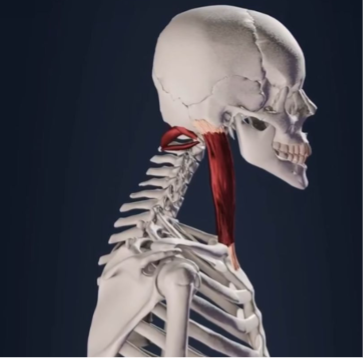
1. The SCM (Sternocleidomastoid)
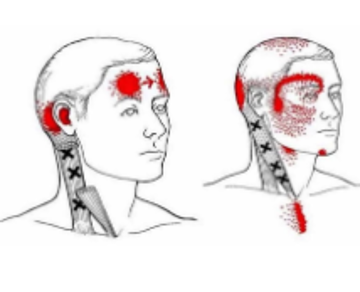
This large muscle runs from your collarbone to your ear. If you sit incorrectly, it becomes overactive. The SCM also helps with breathing. Are you stressed at your desk with heavy breathing? Then there arise trigger points (muscle knots) that pain radiate to your forehead and even to behind your eyes.
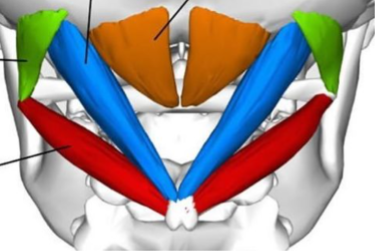
2. The Suboccipital Triangle (the cranial margin)
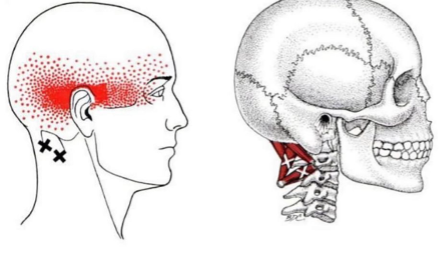
These deep muscles near the edge of your skull keep your head in balance. In a sedentary job they are often 'flattened'. This can pinch nerves and blood vessels that run across your head. Tension here can restrict the flow of cerebrospinal fluid, causing a pounding headache or migraine.
How an “office position” leads to chronic headaches
When your head is forward (anteroposition), a domino effect is created. To continue to see the screen straight, your neck bends backwards. This forces your neck muscles to remain constantly tense.
The consequences of this constant tension:
- Poor blood circulation: Muscles contract and shorten, leading to chronic stiffness.
- Trigger points and radiance: The muscle knots cause a headache that often feels like a tight band around the head.
- Fascial tension: Your connective tissue (fascia) extends to your forehead. Tension in your neck literally pulls on your forehead.
More than just neck pain
Trigger points in the neck can cause more symptoms than you think, such as:
- Balance problems and dizziness.
- Visual disturbances (blurred vision).
- Ear pain or a feeling of pressure in the sinuses (sinus complaints).
The role of the nerves and your spinal column
The SCM muscle is controlled by the accessory nerve (the 11th cranial nerve). In a forward posture, this nerve can become compressed at the base of the skull. This causes the muscle to tighten even more: a vicious circle.
Your body adapts to this incorrect position:
- Kyphosis: The upper back becomes rounder.
- Lumbar lordosis: The lower back concaves to compensate for weak abdominal and gluteal muscles.
Why only training the back often does not help
Many people train their back muscles to improve their posture, but forget about the front. The following happens due to sitting a lot:
- Shortened pectoral muscles: Your shoulders roll forward, causing your back muscles to be constantly stretched and weakened.
- Stuck diaphragm: A collapsed posture blocks your diaphragm, causing your neck muscles to take over breathing and becoming even more overloaded.
Will this headache go away on its own?
The honest answer is: No. Your body adapts to the wrong position, causing complaints to become chronic.
What can you do yourself?
- Stretching: Make it a habit to stretch (open) your chest muscles after each work day.
- Breathing: Focus on low abdominal breathing to rest your neck muscles.
- Professional treatment: Sometimes trigger points are so stuck that targeted therapy is needed to break the cycle of pain.
Don't keep walking around with 'screen headaches'. Would you like to know how I can help you remove these blockages? Then take Contact for an appointment.